Alignoralia
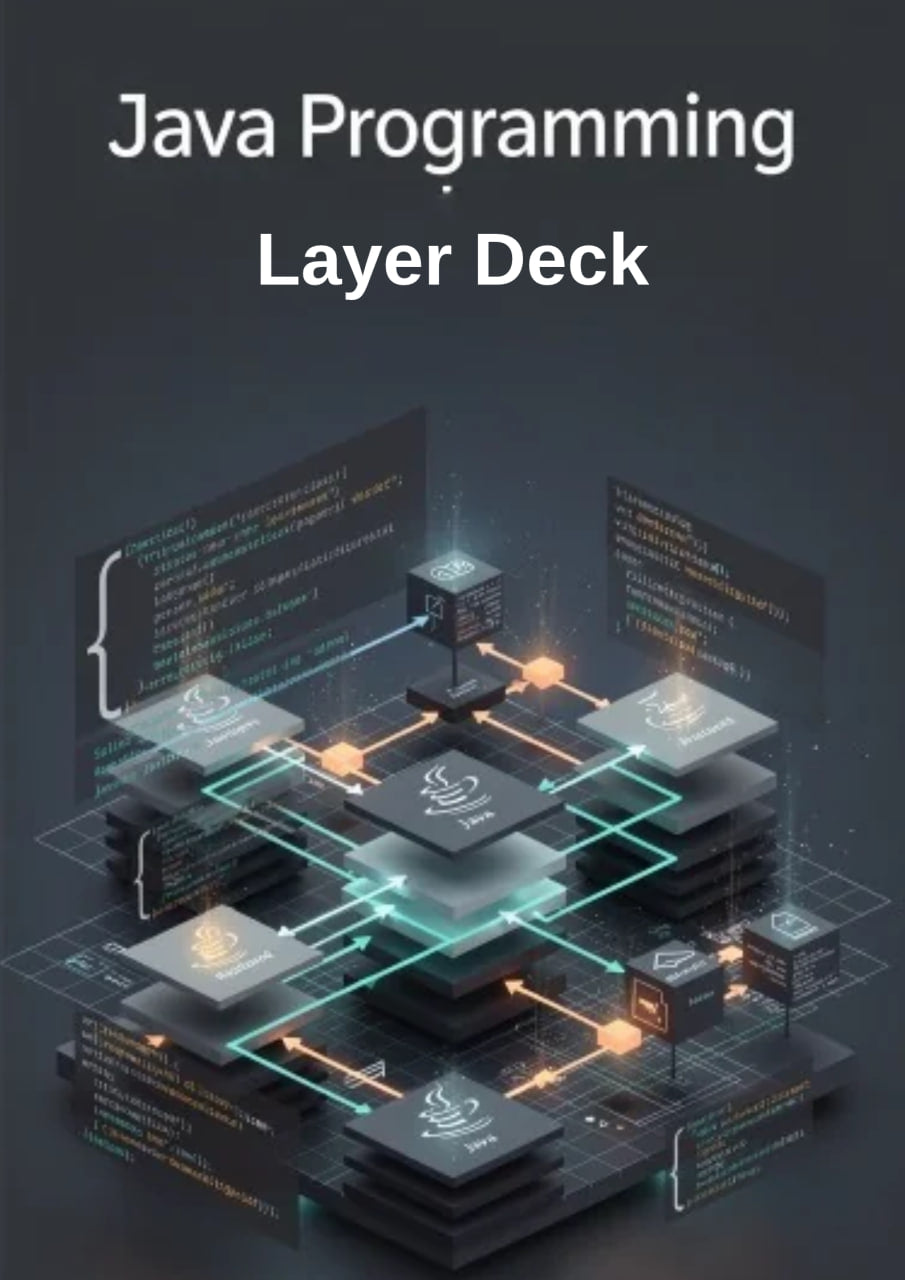
Layer Deck
Layer Deck
Couldn't load pickup availability
- 📩 Digital file available after purchase
- 📚 Long-term availability
- 🔒 Secure checkout
- 🗓️ Content updated in 2026
Self-paced learning overview
1. Problem Statement — When Data Needs Its Own Architecture
After studying object-oriented programming, learners encounter the need to work with larger datasets and more complex operations. Conventional loops and basic collections do not always provide a convenient way to describe multi-stage information processing. Program development also introduces questions about choosing data structures, sorting elements, and using generic types. File reading, value validation, and error handling require additional attention when processing information. Continued Java study involves understanding how these mechanisms can work together within a structured programming model.
2. Solution — Building Logic Through Separate Layers
Layer Deck provides a detailed examination of Java mechanisms for organizing, searching, processing, and storing data. The materials progressively introduce collections, generic types, functional interfaces, lambda expressions, and stream-based operations. Separate modules explain file handling, exception management, and the organization of components with clearly defined responsibilities. Practical exercises encourage learners to compare implementation approaches and analyze program behavior. The concluding educational project combines collections, file operations, and information-processing methods.
3. What's Inside — Course Modules
Module 1: Organizing Data in Java
Examine how to choose data structures according to the requirements of a programming task.
Module 2: Advanced List Operations
Explore adding, removing, searching, and modifying elements within lists.
Module 3: Sets and Distinct Values
Learn how to use sets for storing collections without duplicate elements.
Module 4: Key-Value Data Structures
Examine Map collections for organizing records and retrieving information through keys.
Module 5: Iterators and Collection Traversal
Explore different approaches to traversing collections and modifying their contents.
Module 6: Sorting and Object Comparison
Learn how Comparable and Comparator define ordering rules for objects.
Module 7: Generic Classes and Methods
Study the creation of classes and methods with type parameters.
Module 8: Generic Type Bounds
Explore bounded type parameters and wildcard types.
Module 9: Functional Interfaces
Examine interfaces that describe a single abstract operation.
Module 10: Lambda Expressions
Learn how to write concise implementations of functional interfaces.
Module 11: Method References
Explore references to existing methods and constructors.
Module 12: Stream-Based Collection Processing
Examine Stream API concepts for processing sequences of elements.
Module 13: Data Filtering and Mapping
Learn how filter and map operations create new sequences of values.
Module 14: Aggregation and Grouping
Explore counting, searching, and grouping elements according to defined conditions.
Module 15: Handling Missing Values
Examine Optional as a way to represent results that may contain no value.
Module 16: Data Immutability
Study principles for creating objects whose state remains unchanged after initialization.
Module 17: Working with Text Files
Learn how to read and write textual information using Java.
Module 18: File Data Parsing and Validation
Explore splitting text records into individual values and validating their formats.
Module 19: Resource and Exception Management
Examine try-with-resources and approaches to handling errors during file operations.
Module 20: Dates, Time, and Intervals
Learn how to represent dates, calculate time values, and format results.
Module 21: Separating Component Responsibilities
Explore organizing separate classes for storing, validating, and processing information.
Module 22: Practical Project — Record Catalog
Create an educational program that reads file records, filters and sorts entries, and generates summaries.
Module 23: Logic Testing and Boundary Cases
Examine techniques for checking algorithms with empty collections, duplicate values, and invalid data.
Module 24: Final Course Review
Complete integrated exercises involving collections, generics, functional structures, and file operations.
4. Who Is This For?
✅ This course is suitable if you:
- Already understand fundamental Java syntax.
- Are familiar with classes, objects, inheritance, and interfaces.
- Have introductory experience with collections.
- Want to examine data structures in greater detail.
- Are interested in lambda expressions and functional programming structures.
- Would like to study filtering, sorting, and grouping operations.
- Want to work with text files and data validation.
- Prefer written materials supported by practical examples.
- Plan to complete data-processing assignments independently.
❌ This course may not suit you if you:
- Are just beginning to study Java.
- Have not yet studied classes, methods, or basic collections.
- Need an introductory programming course without previous preparation.
- Are looking for advanced coverage of distributed systems.
- Expect detailed examination of complex network architecture.
- Prefer individual instructor-led sessions over written course materials.
5. What You'll Learn
- Choosing and using Java collections.
- Sorting and comparing objects.
- Generic types and parameterized methods.
- Lambda expressions and functional interfaces.
- Data filtering and grouping.
- Processing text files.
- Working with dates and time values.
- Exception handling and data validation.
- Organizing programming components.
- Building algorithms for record processing.
6. Refund Terms
Layer Deck has a 14-day refund period, subject to the published refund policy of the Alignoralia store. Before placing an order, we recommend reviewing the refund conditions for digital educational materials, the request submission procedure, and the provisions concerning files already received.
7. Certificates & Credentials
Upon completing Layer Deck, learners receive an Alignoralia PDF certificate documenting their completion of the layered Java application architecture course.
Do I need previous programming experience to study Alignoralia courses?
Do I need previous programming experience to study Alignoralia courses?
The Alignoralia collection covers different stages of learning Java. Introductory materials explain fundamental syntax and programming principles, while subsequent courses explore more detailed technical topics. Before choosing a course, we recommend reviewing its description, module outline, and practical exercises.
What format do the learning materials use?
What format do the learning materials use?
Alignoralia courses are presented as written PDF coursebooks. The materials contain topic-based sections, explanations of programming structures, code examples, and exercises for independent study. This format allows learners to revisit specific subjects during their studies.
Can I study the materials at my own pace?
Can I study the materials at my own pace?
Yes. The written format allows you to organize your own study sessions, review explanations, and spend additional time on individual exercises when needed. You can plan your studies around your schedule and previous knowledge.
Share